
The Single Most Correlated Metric to the S&P500
From QE1 to Today

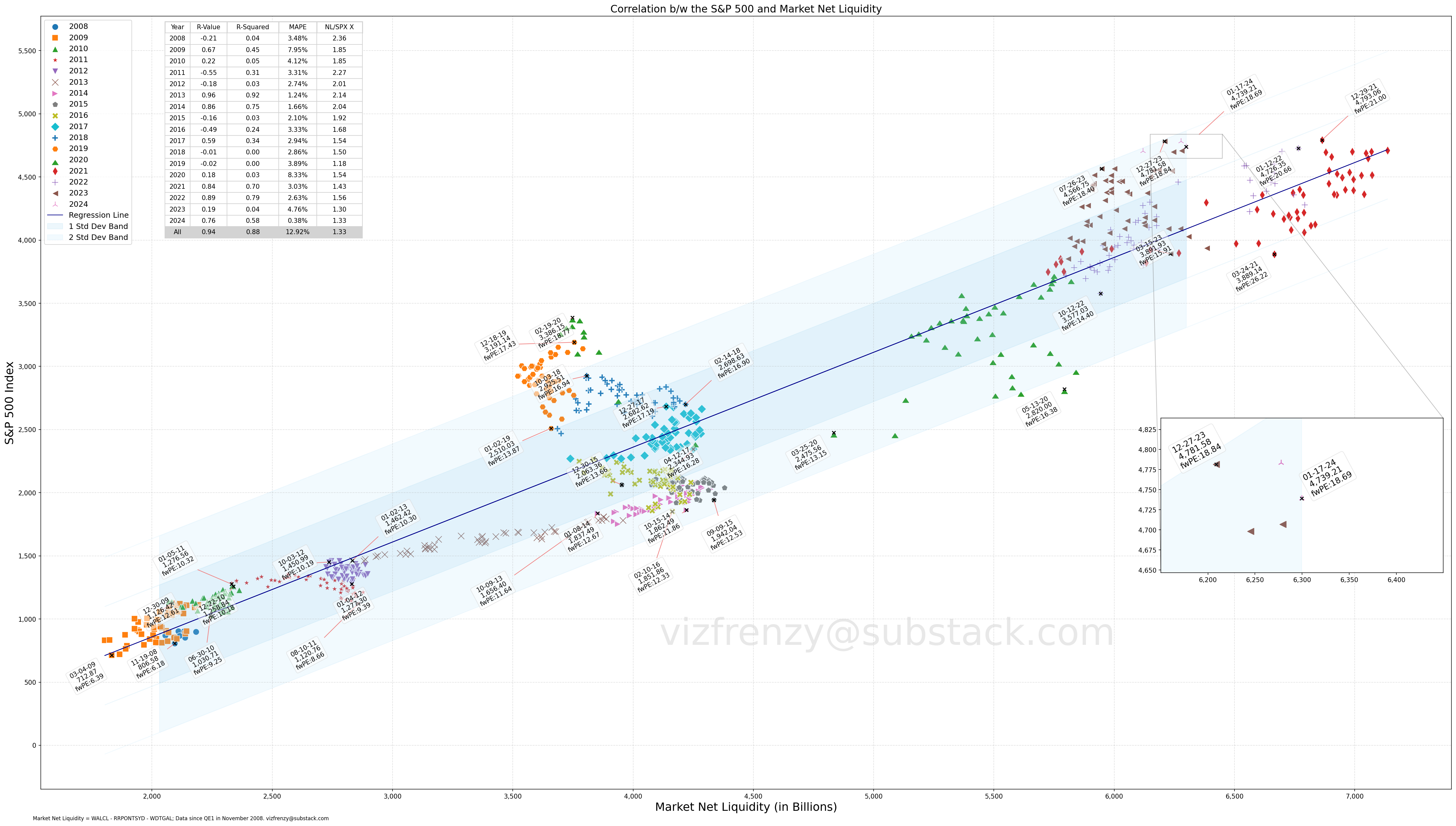
There isn't a single metric that can comprehensively explain the past or provide insight into the future for the financial market, even when considering all available data points in the world. While there is often discussion about the strong correlation between the Fed's balance sheet with the S&P 500 or variations like net liquidity since the first Quantitative Easing (QE) in November 2008, it's essential to recognize that the Fed's balance sheet is just a small component of the larger picture.
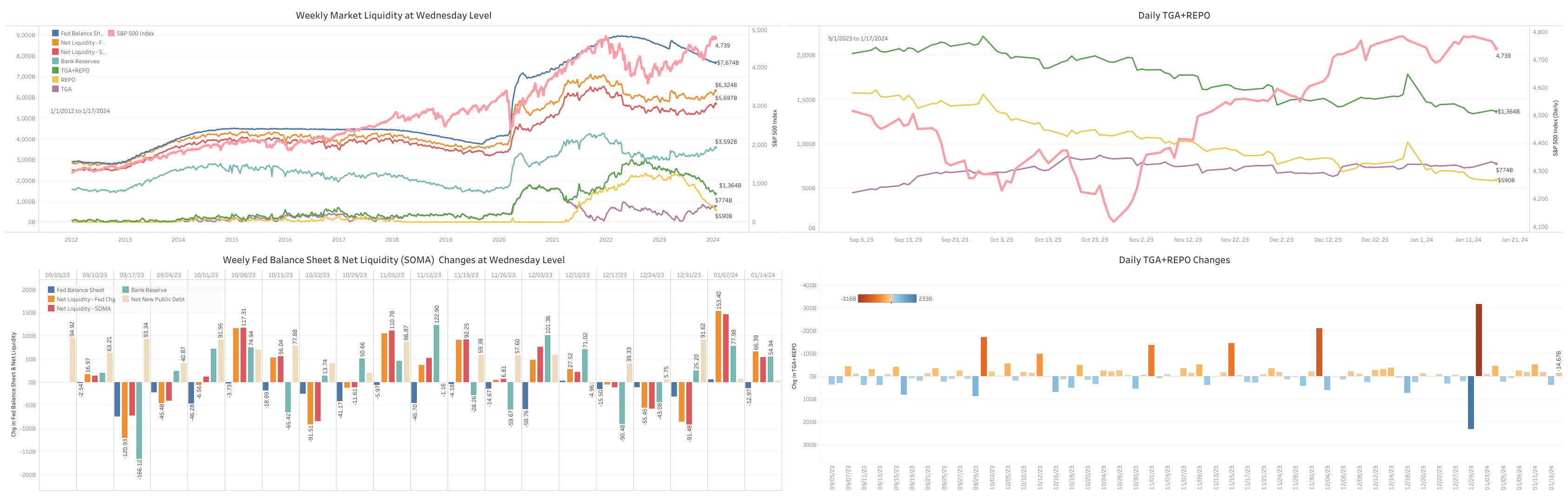
Certainly, the Fed has been a significant buyer and holder of our National Debt1, offering support for government spending during challenging times in the past. However, it's crucial to note that the Fed's balance sheet is relatively modest at 7.67 billion compared to our National Debt, which has exceeded 34 trillion as of 01/17/2024. Surprisingly, the S&P 500 continues to rise despite the Fed's ongoing reduction of its balance sheet by about 95 billion each month.
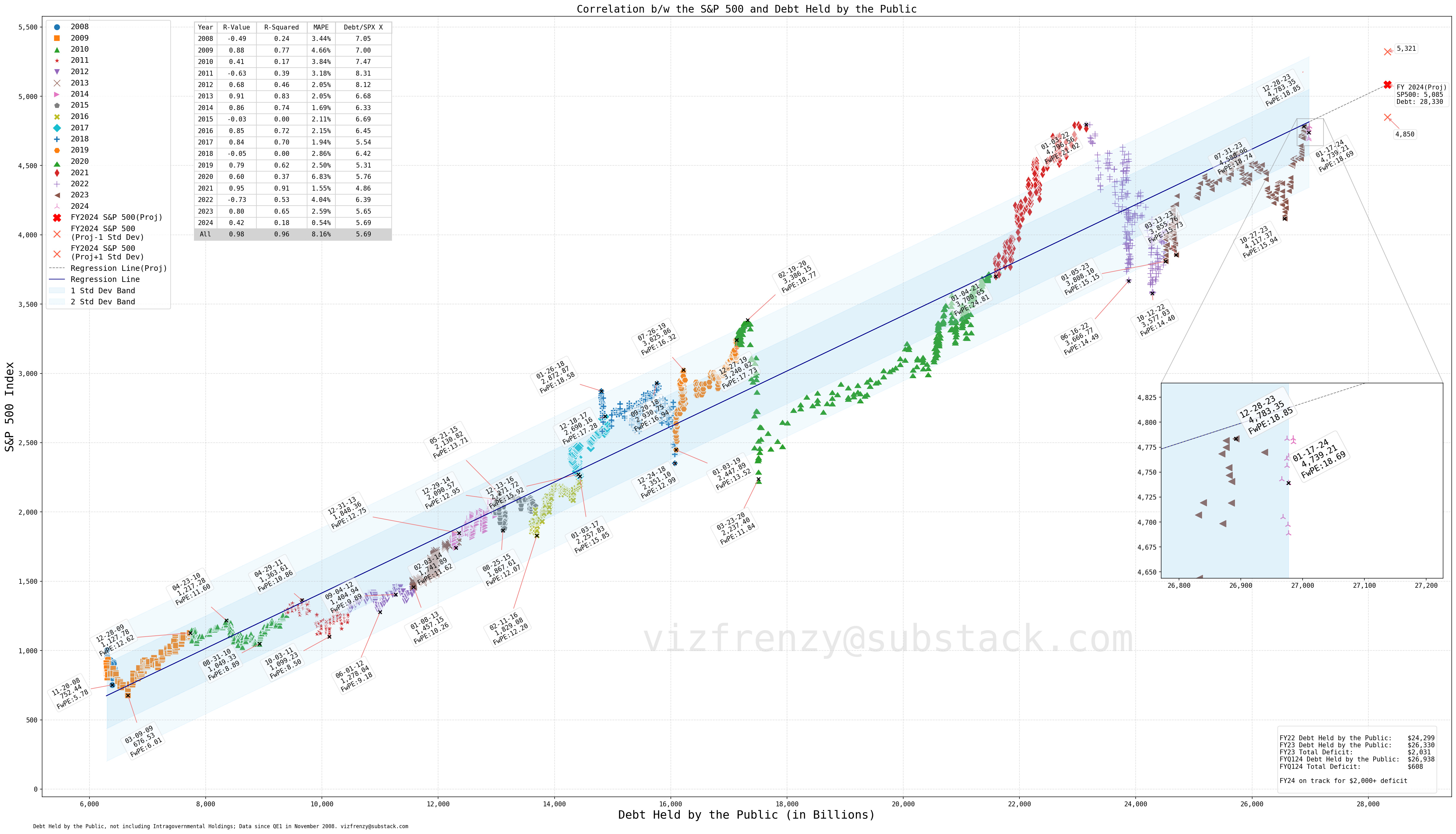
If you are just looking for one metric, the Debt Held by the Public2 has been exhibiting the strongest correlation with the S&P 500 since QE1 in 2008, boasting a correlation coefficient of 0.98 (with 1 being the maximum).
The National Debt is the total amount of money that the federal government owes, either to its investors (debt held by the public) or to itself (intragovernmental debt). Intragovernmental debt is owed by Treasury to other parts of the federal government.
The Debt Held by the Public is all federal debt held by individuals, corporations, state or local governments, Federal Reserve Banks, foreign governments, and other entities outside the United States Government less Federal Financing Bank securities.